Use the tool
Open Print Size Checker
Check effective PPI and compare a center crop with keeping the whole image.
Find which print sizes your artwork can support, preview the crop, and check the files you will deliver to buyers.
Divide the pixels you will actually print by the print size in inches. A 2400 × 3000 pixel image fills an 8 × 10 inch print at 300 PPI. A different aspect ratio needs cropping or margins. Etsy separately allows up to five digital files, each at most 20 MB; that is a delivery limit, not a print-quality standard.
Use this order to get a clean result without extra work.
Use the full-resolution artwork, not a listing thumbnail or screenshot. The checker can read a JPG, PNG, or WebP, or you can enter dimensions yourself.
Choose inches or centimeters and a target PPI. Start at 300 PPI for a close-viewed print, then follow the print provider’s requirements.
Check the preview for lost borders, lettering, signatures, or other details. A passing pixel calculation does not establish that the crop looks right.
Keep the master. Inspect the actual output files, names, and bytes, then describe the sizes and ratios included in the listing.
PPI means image pixels per inch of print. Adobe describes 300 PPI as a common target for high-quality prints viewed closely; larger work viewed farther away may use less. The print provider and the artwork still matter.
Check effective PPI and compare a center crop with keeping the whole image.
An 8 × 10 print is 4:5, an 11 × 14 print is 11:14, and an 18 × 24 print is 3:4. One uncropped file cannot fill all three shapes without margins or distortion. Prepare each promised crop from the master and inspect its edges.
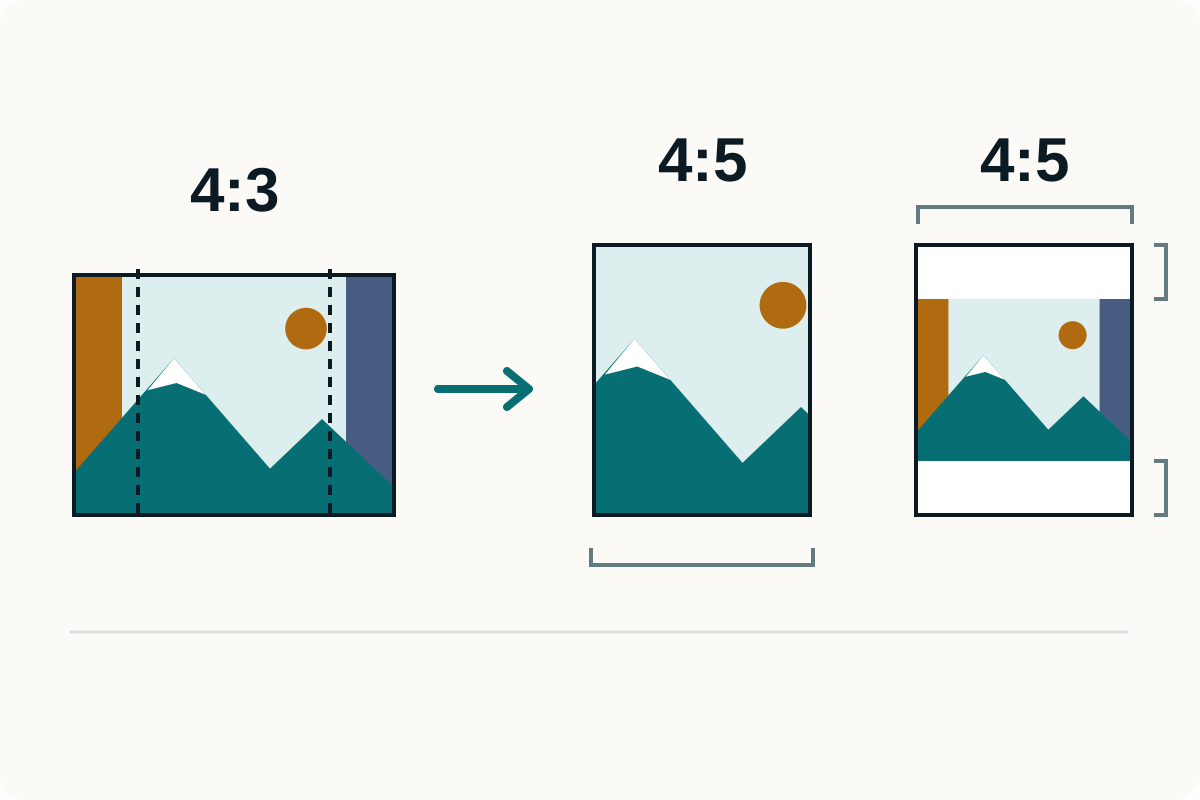
This illustration uses a 4:3 source and a 4:5 print area. The downloadable numerical example below uses a different ratio.
Our downloadable pixel ruler makes the arithmetic visible. At 6 × 4 inches it gives 200 PPI. On 4 × 4 inch paper, keeping the whole image produces a 4 × 2⅔ inch image at 300 PPI with margins. Filling that square crops the source to 800 × 800 pixels, gives 200 PPI, and removes one-third of its area.
The linked data records the inputs, crop geometry, PPI, source hash, and calculation implementation hash.
Etsy’s digital-listing documentation permits up to five uploaded files, each no larger than 20 MB. Its supported digital formats include JPG/JPEG, PNG, PDF, and ZIP. These are the files a buyer receives, separate from your listing photos.
The cited Etsy digital-listing requirements specify supported formats, five files, and 20 MB per file. They do not impose a universal 300 PPI print requirement. Choose a pixel density for the intended print, viewing distance, and print provider.
Changing a resolution label without resampling keeps the same pixels and changes the physical size associated with them. Resampling creates more or fewer pixels, but does not recover missing detail from the original.
Those print sizes have different aspect ratios. You can keep the whole image with margins, or make a separate crop. Check whether anything important disappears and calculate PPI from the pixels retained.
No. It checks geometry and previews cropping or margins. Export your deliverable files from your editor, inspect each final file, and describe the included ratios and sizes accurately.
Choose the tool for the change your file needs.